SEO & AEO
The Fine Arts of Escape Room Marketing Strategy (2025): A Complete Playbook
Last Updated on • Escape Room Marketer

As an escape room business owner, while your players are solving puzzles, you’re solving the real one: how to grow bookings, build loyal fans, and stand out in a crowded market?
That’s where a smart escape room marketing strategy becomes your secret escape key!
Because in today’s world, you’re not just competing with other escape rooms, you’re competing with Netflix, bowling nights, restaurants, and “let’s just stay home”!
You need more than random posts or discounts; you need a plan that keeps your rooms full and your players talking.
In this guide, you’ll find proven escape room marketing strategies designed specifically for escape room business owners like you—practical, effective, and ready to put into action!
Key Takeaways
Before diving deep, here’s a quick snapshot of what a powerful escape room marketing strategy looks like in 2025. These key takeaways will help you focus on what truly drives growth—more visibility, stronger engagement, and consistent bookings all year round.

- Build a strong brand—sell experiences, not just puzzles.
- Know your audiences and tailor messages for each group.
- Follow a 90-day plan focused on visibility, engagement, and bookings.
- Optimize your Google Business Profile with posts, reviews, and local photos.
- Run targeted Google Ads and remarketing campaigns to drive conversions.
- Use social media to share real reactions, stories, and team moments.
- Automate emails and SMS for reviews, rebookings, and special offers.
- Tell compelling stories—make players the heroes of your brand.
- Keep your website fast, clear, and conversion-focused.
- Track everything with various tools like GA4, GTM, and Looker Studio.
- Promote events year-round—birthdays, corporates, and holidays.
- Innovate with AI, AR, gamification, and smart pricing.
Branding Foundations
Before you market your escape room, define the story behind it. Branding isn’t just your logo; it’s the emotion people feel when they play your games!

Branding Checklist:
- Define your tone: Are you thrilling, mysterious, family-friendly, or corporate-focused?
Visual consistency: Use the same fonts, colors, and imagery across your website, ads, and social media.
Mission statement: For example, “We create unforgettable adventures that bring people together.”
Signature experience: Make each room feel like a chapter in your overall story.
Pro Tip: Don’t sell “escape games”; sell memories, teamwork, and laughter. That’s your true product!

Your brand is the story players remember
Keep it clear, consistent, and full of heart—because people don’t just book games, they book emotions. Need help defining your brand voice? We’re right here to guide you.
Who You’re Marketing To (and What They Want)
Every audience books for different reasons. Understanding these differences helps you craft messages that convert.
| Audience | Pain Point | Hook | Channel | Metric |
|---|---|---|---|---|
| Families & Birthdays | “We need fun for all ages.” | “Screen-free adventures everyone can enjoy.” | Google Maps, Facebook | Family bookings |
| Date Nights & Couples | “Dinner & movies are boring.” | “The most exciting date night in town.” | TikTok, Reels | Couple bookings |
| Corporate & Schools | “We need team-building that works.” | “Build collaboration and celebrate success.” | LinkedIn, Google Ads | Corporate inquiries |
| Friends & Tourists | “We’ve done everything else.” | “Escape ordinary weekends.” | Search, GBP | Group traffic |
When you speak directly to each audience’s need, your marketing feels personal—and that builds trust!
Your 90-Day Escape Room Marketing Plan
A strong escape room marketing strategy doesn’t happen overnight—it’s built step by step, with clear actions and measurable goals.
This 90-day plan is your roadmap to steady growth, helping you focus on what really moves the needle: visibility, engagement, and consistent bookings.
Follow each stage to turn scattered efforts into a structured, repeatable system that fuels your escape room’s long-term success.
1. Google Business Profile (GBP) and Local SEO
Your Google Business Profile is the foundation of your online visibility—it’s often the first place players discover your escape room.
Think of it as your digital storefront that shows up on Google Maps and “near me” searches. Optimizing it is one of the most effective escape room marketing tactics because it helps you appear where your customers are already searching.
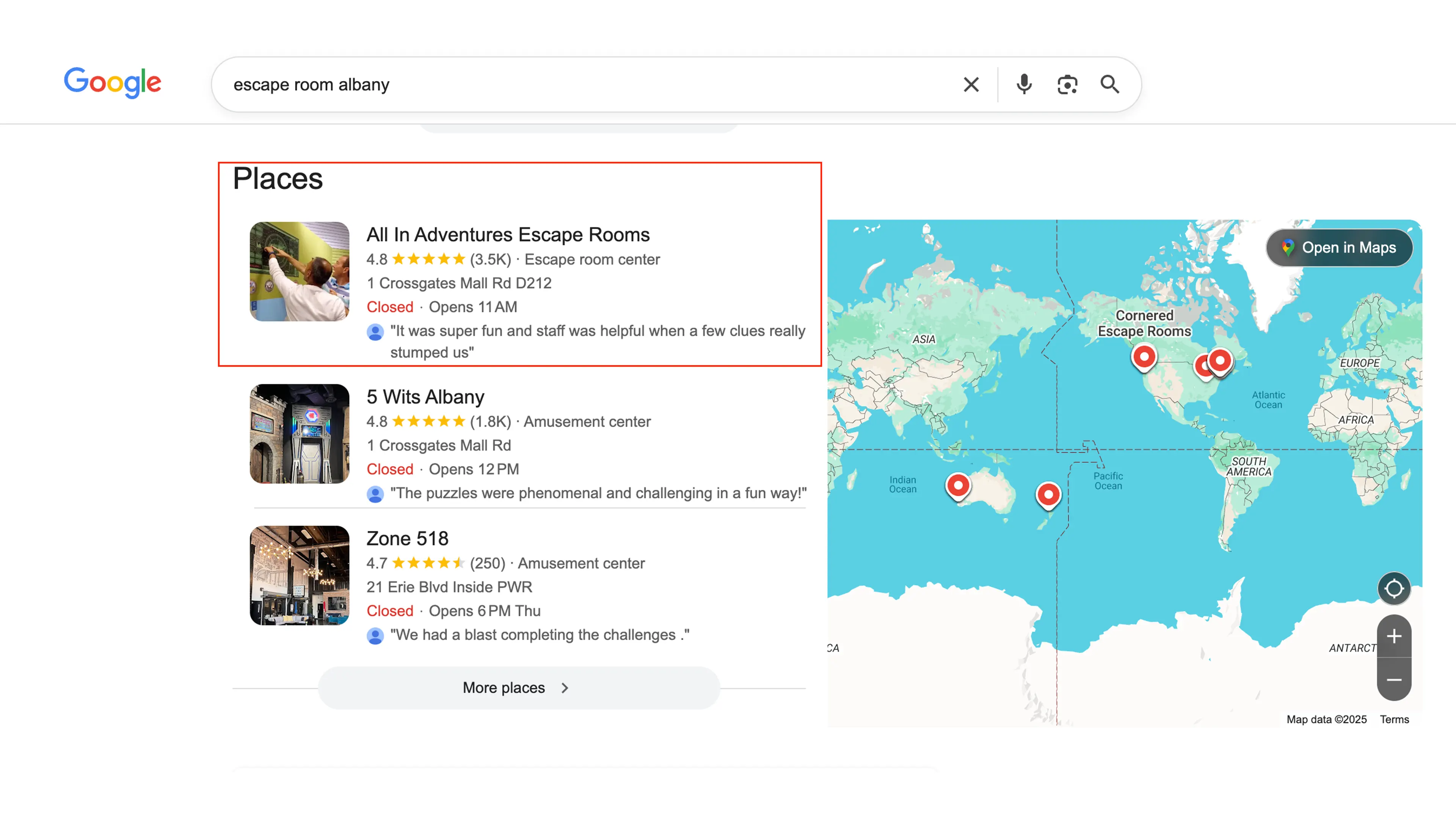
By keeping your GBP active with posts, photos, and reviews, you signal trust and relevance to Google, which boosts your local ranking and drives more foot traffic and bookings.
Here’s your GBP Optimization Checklist:
- Add each room as a Product (with photos, themes, and difficulty levels).
- Post weekly updates—player photos, new challenges, promotions.
- Use geo-tagged images for local relevance.
- Update Q&A with FAQs (including age limits, parking, and team size).
- Reply to every review within 48 hours.
- Encourage players to mention your city name + room name in reviews.
Pro Tip: Consistent activity on GBP = better local rankings and more map clicks. For a deeper dive, check out our in-depth guide on optimizing Google Business Profile for escape rooms.
2. Google Ads (Search, Performance Max, Display, Video)
Google Ads are one of the most powerful escape room marketing techniques for reaching players at the exact moment they’re ready to book.
Search Campaigns on Google capture high-intent customers who are actively looking for escape rooms in your city.
Performance Max (PMax) campaigns combine search, display, video, and maps placements to automatically show your ads to the right audiences—perfect for reaching new players.
Display and YouTube Video Ads help you retarget past visitors and showcase your rooms through visuals or short YouTube trailers.
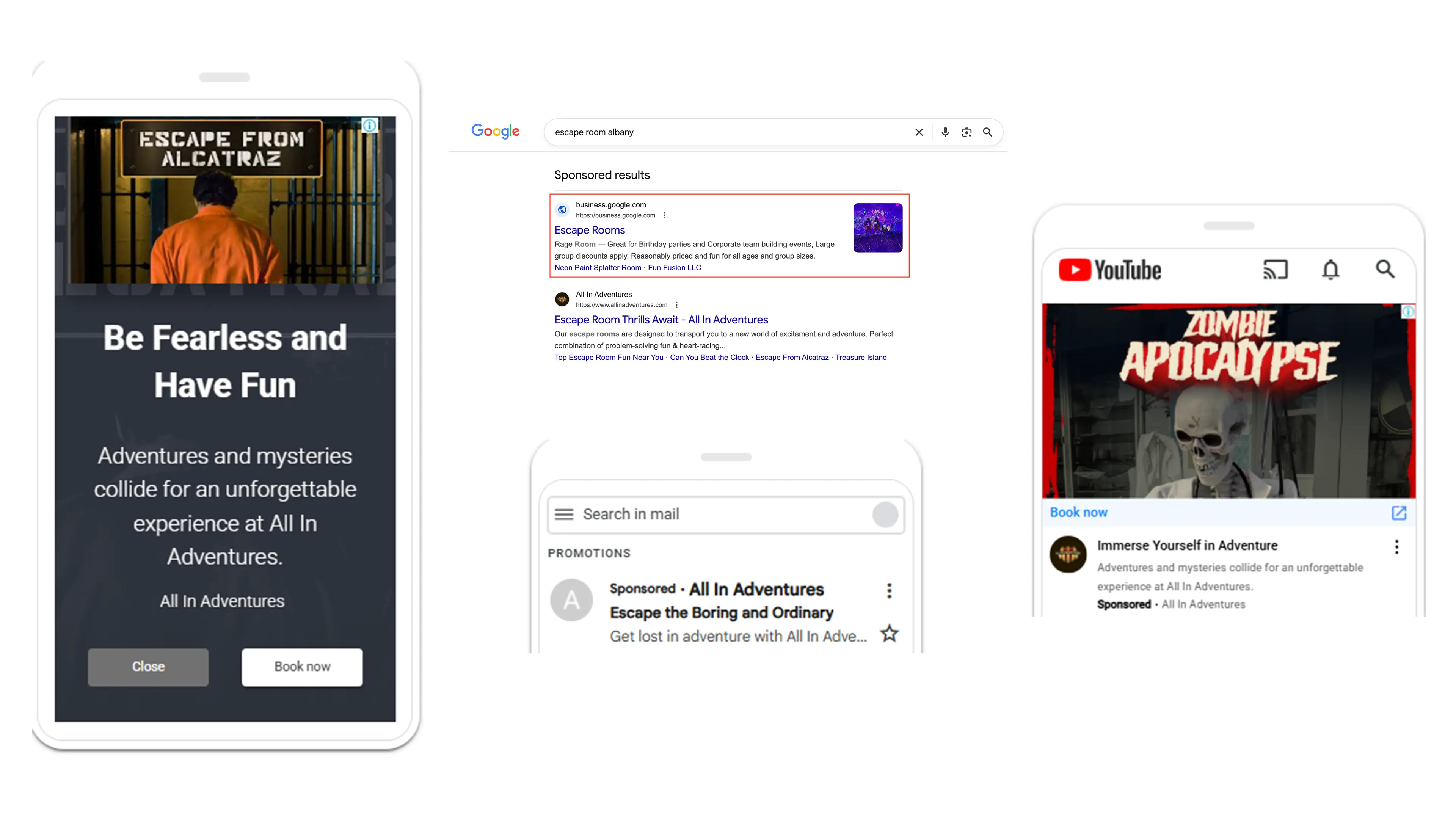
Together, these Google Ads campaigns form a full-funnel escape room marketing strategy that drives awareness, engagement, and bookings.
Here’s how you can leverage Google Ads to grow your escape room brand!
Search Campaigns:
- Target high-intent keywords:
escape room near me
escape room [city]
team building [city]
birthday party ideas [city]
- Add callouts: “Book Online,” “New Rooms,” “Perfect for Groups.”
- Include sitelinks for gift cards, team-building, birthdays, and location pages.
- Track conversions with GA4 and GTM.
Performance Max (PMax):
- Create 3 asset groups: Families, Corporates, Couples.
- Upload videos and user-generated content for each.
- Use audience signals from Google Analytics.
Display and Video Ads:
- Run remarketing display ads for site visitors.
- Launch short YouTube bumper ads: “Your next adventure starts here.”
- Promote 15-sec room trailers on YouTube Shorts.
Budget Tip: Start with $20–$30/day per location, then scale once you achieve <$20 cost per booking.
To learn more, read our article on Google Ads for Escape Rooms.
Think you need a big budget for big impact?
It’s not about spending more—it’s about speaking smarter. With the right focus and creativity, even small campaigns can fill your rooms. Still unsure where to begin? No worries—we’ve got your back every step of the way!
3. Social Media Marketing (Facebook, Instagram, TikTok, YouTube, Snapchat, LinkedIn)
Social media is where your future players hang out—and it’s one of the most powerful escape room marketing techniques to turn curiosity into bookings.
Platforms like TikTok, Instagram, and Facebook let you showcase the laughter, teamwork, and excitement players experience inside your rooms.
YouTube Shorts and Snapchat help you reach new audiences with short, cinematic clips, while LinkedIn connects you with corporate clients looking for team-building ideas.
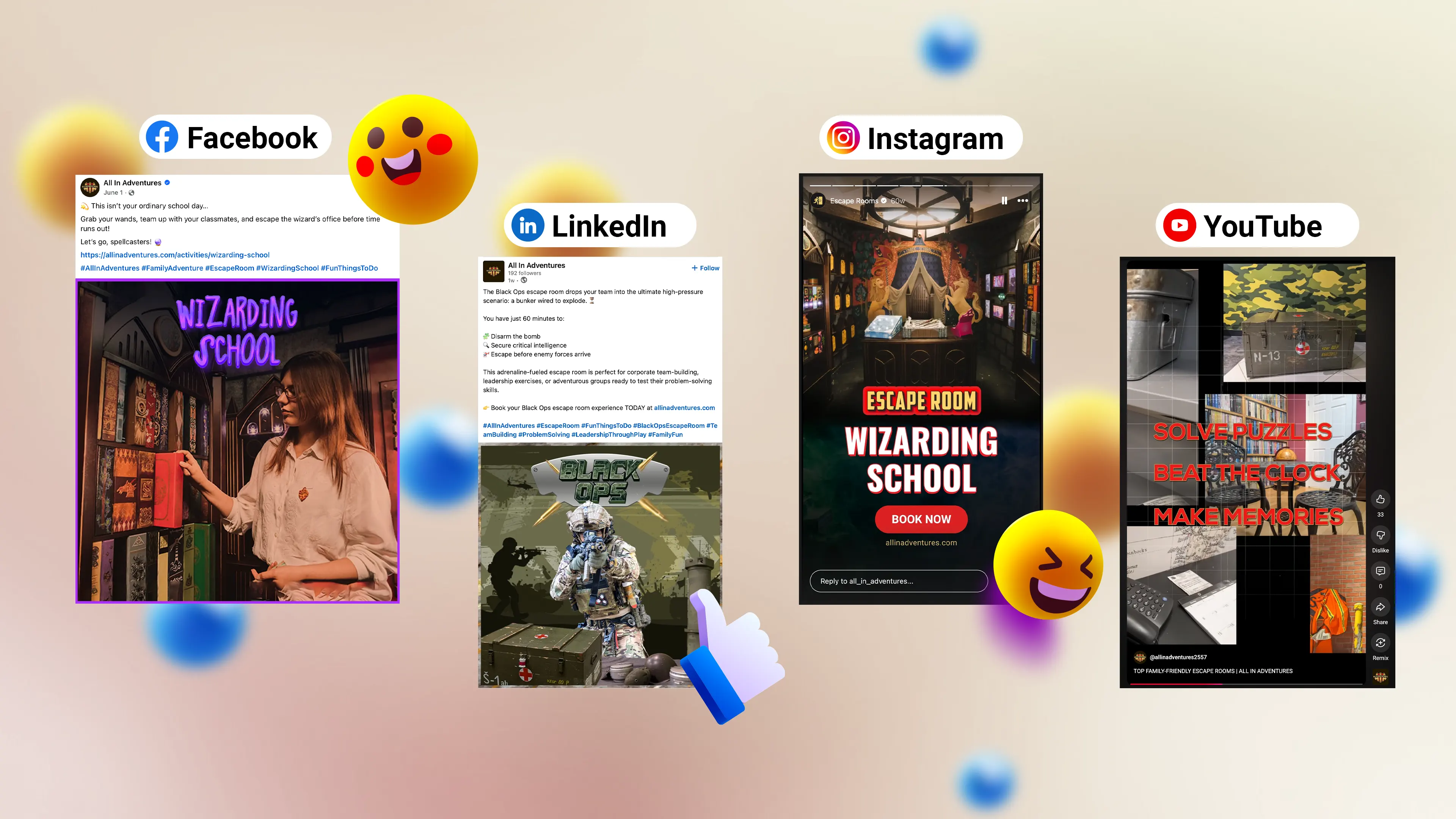
The key is consistency—share authentic moments, behind-the-scenes stories, and quick puzzle teasers that make viewers think, “We’ve got to try that!”
Here’s how you can leverage social media marketing to grow your escape room brand.
Weekly Content Framework:
- 1x reaction video (teams celebrating escape)
- 1x puzzle teaser or challenge clip
- 1x staff or behind-the-scenes feature
- 1x player testimonial reel
Platform Tips:
- TikTok/Reels: Fast, emotional, vertical videos (9:16).
- Facebook/Instagram: Carousel ads for birthday & family packages.
- YouTube Shorts: 15-sec cinematic puzzle trailers.
- LinkedIn: Team-building stories & corporate case studies.
- Snapchat: Use “Things to Do” geo-lenses during weekends.
Hook Examples:
- “Think you could solve this in under a minute?”
- “This couple tried our hardest room—watch what happened!”
- “Corporate team escaped in record time!”
Pro Tip: Show real moments—authentic laughter and teamwork clips perform far better than polished ads. For more insights, check out our blog post on Strategic Social Media Management for Escape Room Businesses.
4. Retention, Email, and SMS Automation
Once players leave your escape room, your connection with them shouldn’t end there.
Email and SMS automation are essential escape room marketing tactics that help you stay top-of-mind, turn one-time visitors into loyal customers, and drive repeat bookings.
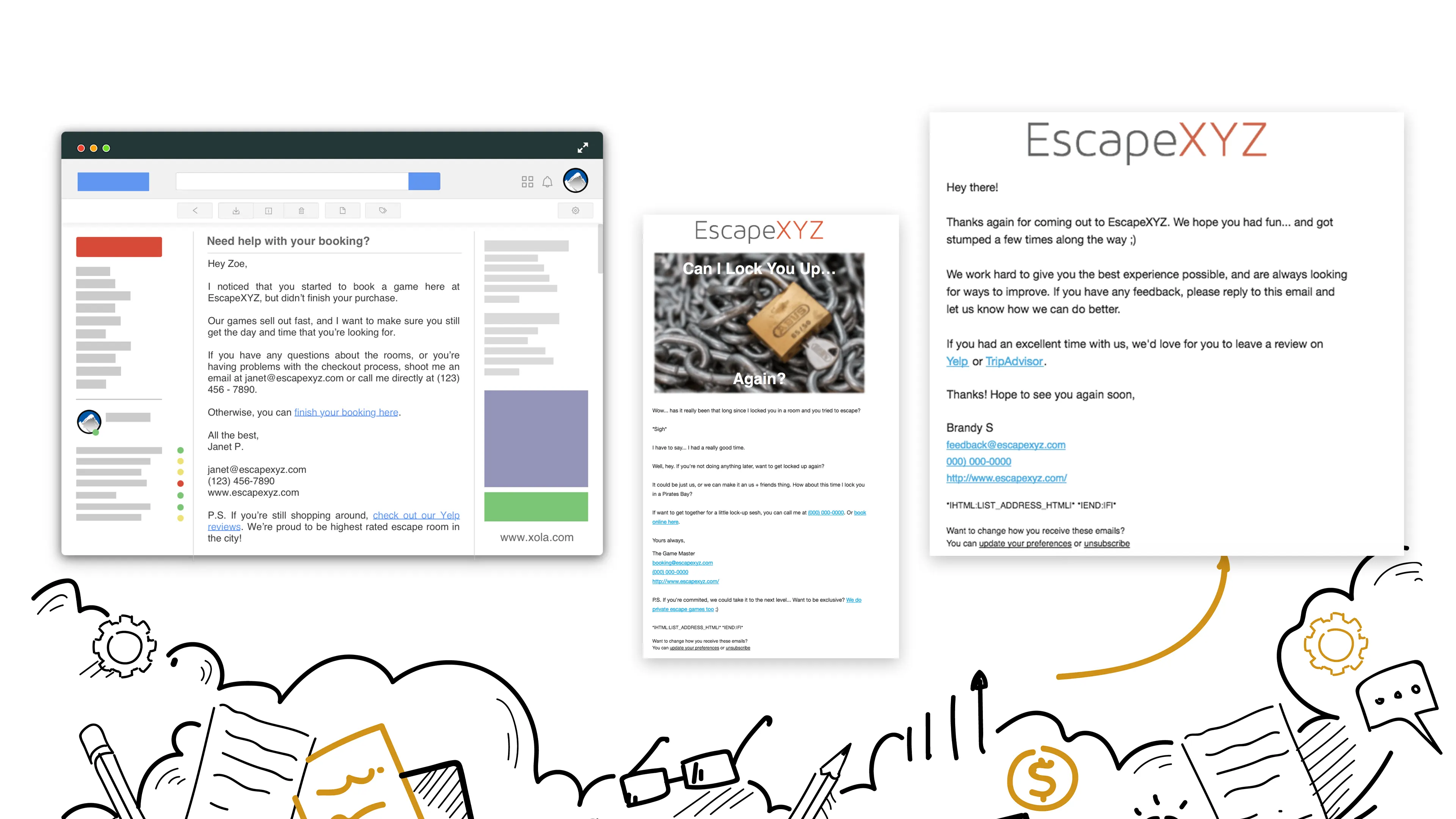
By automating review requests, birthday offers, and rebooking reminders, you build long-term relationships without constant manual effort—keeping your rooms full and your players engaged all year round.
Email and SMS Workflows:
- Post-visit: Thank-you + review request + return offer.
- Birthday reminders: “Celebrate your big day with a new adventure!”
- Corporate rebooking: “Let’s plan your next team challenge.”
- Abandoned checkout: “Your adventure awaits — finish your booking now.”
- Holiday offers: Gift card promotions with limited-time codes.
Tool Tip: Use Mailchimp, ActiveCampaign, or HubSpot linked to your booking system (Resova, FareHarbor, etc.). Automate it once—let it run forever!
Stay connected beyond the game
Every social media post, message, Email, and thank-you builds a bridge that keeps players coming back. Keep showing up, keep sharing, and let your story do the rest.
5. Creative Storytelling Strategies
Every great escape room experience is built on story—and your marketing should be, too. It helps players see themselves as the heroes of the adventure.

By blending emotion, suspense, and teamwork in your ads, visuals, and copy, you turn ordinary promotions into experiences that spark curiosity, connection, and action.
Mini Story Framework:
- Hero: Your player
- Challenge: The mission or mystery
- Guide: Your Game Master / Brand
- Victory: The escape moment
Headline Formula:
{Action Verb} + {Benefit} + {Emotion}
“Solve. Laugh. Escape. Together.”
Ad Copy Template:
Headline: “Think You Can Escape in 60 Minutes?”
Description: “Gather your team and experience 60 minutes of fun, puzzles, and memories. Book your adventure in [City] today!”
Call to Action (CTA): “Start Your Adventure”, "Book Now", "Book Your Game", etc.
CTA Variants:
- “Book Your Game Now”
- “Reserve Your Escape”
- “Challenge Accepted?”
- “Play, Laugh, Escape.”
Creative Tip: Use cinematic visuals—low-light tension shots, laughter moments, and team celebration frames.
6. Website and Conversion Rate Optimization (CRO)
Your website is where curiosity turns into bookings!
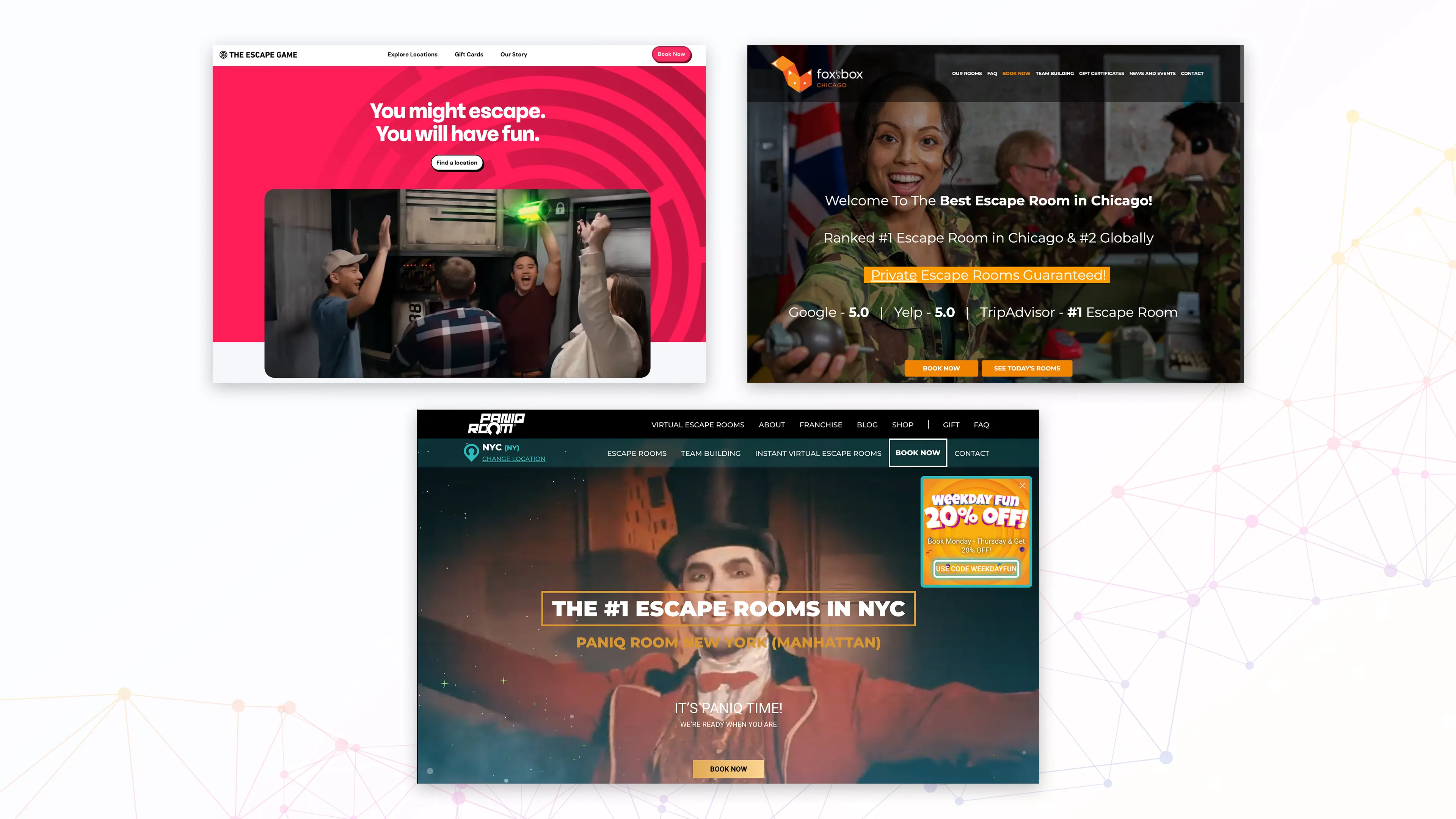
A well-designed site should load fast, guide visitors effortlessly, and make booking feel like the natural next step. By improving user experience, highlighting reviews, and simplifying navigation, you remove friction and turn more clicks into confirmed reservations.
The following are the keys to a high-converting escape room website!
Above the Fold:
- “Book Now” CTA
- Compelling tagline
- 5-star review snippet
- Room gallery grid
Booking Flow Tips:
- Mobile speed under 2 seconds.
- Gift card CTA in the main menu.
- Simple corporate quote form.
- Calendar-style booking interface.
- Sticky header on mobile.
CRO Tip: Keep it simple—every extra click or distraction between curiosity and “Book Now” can cost you a customer! Want more insights? Check out our in-depth article on Web Design for Escape Rooms.
Telling great stories, but no bookings?
You might not need a new strategy—just a smoother path from story to “Book Now”. Feeling unsure where to start? Schedule a free consultation, and we’ll help you turn your storytelling into steady bookings.
7. Analytics, Tracking, and Attribution
No escape room marketing plan is complete without knowing what’s working and what’s not.
Analytics and tracking tools like GA4, GTM, and Looker Studio help you see where your bookings come from, how ads perform, and which channels drive real revenue.

By reviewing this data weekly, you can refine campaigns, allocate budgets smarter, and grow with confidence instead of guesswork.
Essential Tools:
Track Weekly:
- Bookings per source
- Click Through Rate (CTR) / Cost Per Click (CPC) trends
- Cost per booking (<$20 goal)
- Conversion rate (4–6%)
- Review count velocity
- Top-performing ad creatives
Advanced Tip: Combine ad + booking data in Looker Studio for a media mix view (which channel actually drives bookings).
8. Event-Based Marketing (Birthdays, Corporate, Kids, Seasonal)
Event-based marketing is one of the smartest escape room marketing strategies to boost bookings year-round.
By tailoring your promotions to occasions like birthdays, corporate events, or holidays, you reach players when they’re actively looking for something special to do.
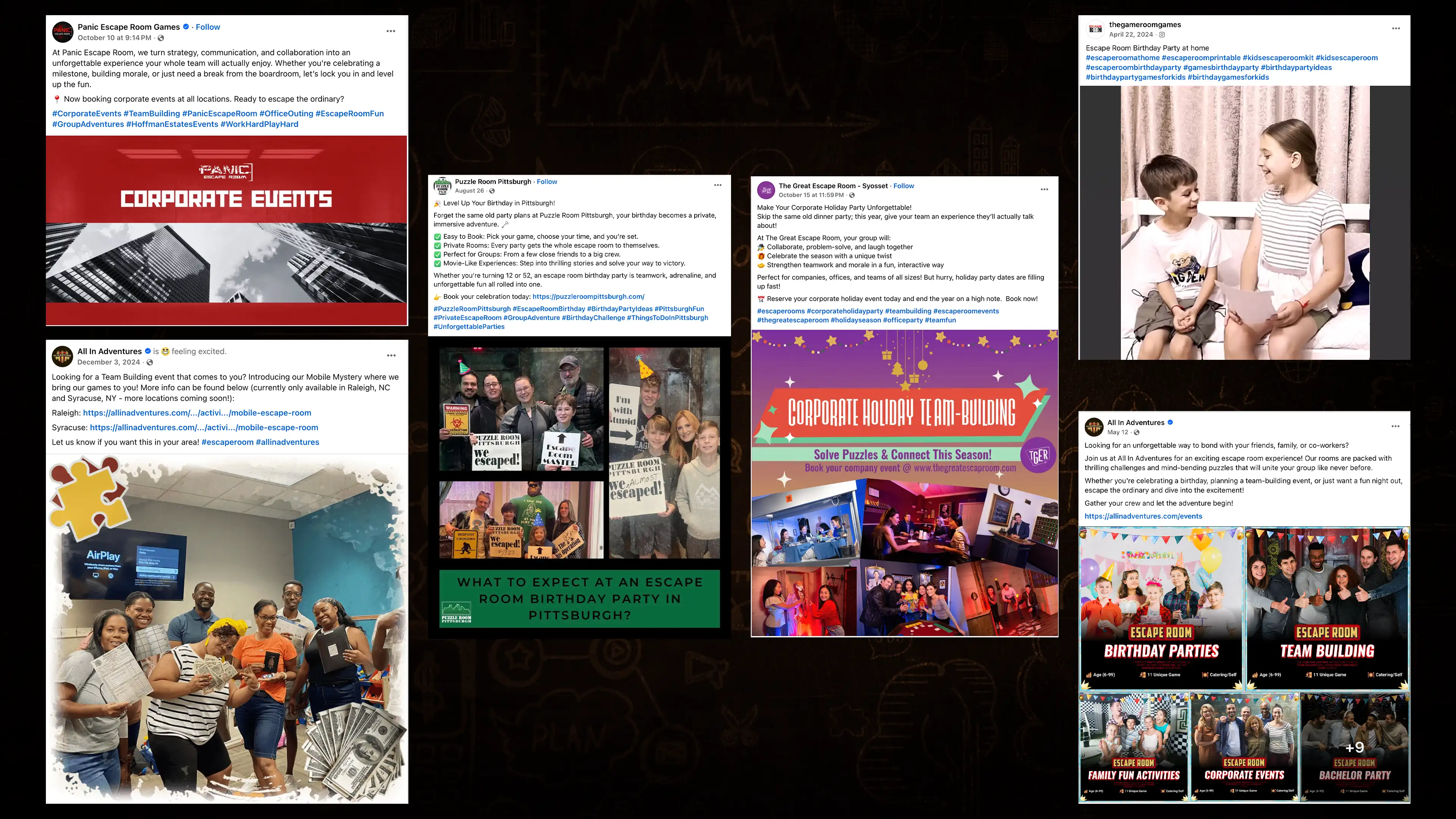
Each event gives you a chance to position your escape room as the perfect place to celebrate, connect, and create unforgettable memories.
Campaign Ideas:
- Birthday Parties: “Turn your birthday into an unforgettable adventure.”
- Corporate Team Building: “Work together. Escape together.”
- Kids & Families: “Family-friendly rooms—designed for fun, not fear.”
- Date Nights: “Skip the movie—make memories instead.”
- Gift Cards: “Adventure makes the perfect gift.”
SEO Tip: Create separate landing pages targeting “[city] birthday party escape room”, “corporate team building [city]”, etc. For more insights, explore our blog post on Event-Based Marketing for Escape Rooms.
9. Seasonality
Every season brings a new opportunity to attract players.
By planning campaigns around seasonal trends and local events, you can keep bookings steady even during slower months.
From winter team-building to summer family deals, aligning your offers with the calendar helps you stay relevant and profitable all year long.
| Season | Focus | Campaign Idea |
|---|---|---|
| Winter (Q1) | Indoor team events | “Beat the Cold—Team Building Fun Awaits!” |
| Spring (Q2) | Student breaks | “Escape the Ordinary This Spring!” |
| Summer (Q3) | Family trips | “Kids Play Free Fridays!” |
| Fall (Q4) | Holidays | “Scary-Good Halloween Escapes!” |
Off-peak boosters: weekday bundles, student offers, rain-day ads, loyalty rewards.
10. Advanced and Future Tactics (2025 and Beyond)
The escape room industry is evolving fast—and the most successful brands are the ones willing to innovate.
Future-focused escape room marketing tactics like AI personalization, AR/VR experiences, and gamified loyalty programs can help you stand out and attract tech-savvy players.
By experimenting with these new tools and partnerships, you’ll keep your brand fresh, media-worthy, and miles ahead of the competition.

Emerging Strategies:
- AI Personalization: Chatbots recommending the perfect room for each player.
- AR/VR Teasers: Virtual puzzles leading into your physical games.
- Gamification: Loyalty points, hidden codes, and leaderboards.
- Partnerships: Cross-promote with hotels, malls, and event venues.
- Dynamic Pricing: Adjust rates automatically for off-peak slots.
Innovation Tip: Press loves “firsts.” Use AR or AI-based rooms to earn natural backlinks and local media coverage.
Got the data? Let’s build momentum!
When your insights shape your events, your seasons stay strong, and your strategy keeps evolving with time, growth becomes unstoppable. So why wait? Let’s turn today’s numbers into tomorrow’s breakthroughs.
Benchmarks and Targets (2025 Snapshot)
Every strong escape room marketing strategy needs clear benchmarks to measure real progress. These 2025 targets will help you track what’s working, spot growth opportunities, and fine-tune your campaigns for even better results.
| Metric | Industry Avg | Your Goal |
|---|---|---|
| CTR (Google Ads) | 6–10% | ≥8% |
| CPC | $1.20–$2.80 | <$2.00 |
| Booking Conversion Rate | 3–6% | ≥5% |
| Cost per Booking | $15–$25 | <$20 |
| Review Velocity | 15/mo | ≥20/mo |
| Email Open Rate | 35% | ≥40% |
Escape Room Marketing FAQs (2025)
Even the best escape room marketing strategies leave owners with a few lingering questions—from ad budgets and weekday traffic to reviews, gift cards, and ROI.
This quick FAQs section gathers the most common questions escape room owners ask us every week and gives you clear, no-fluff answers you can act on right away.
Think of it as your personal cheat sheet for smarter, faster marketing decisions.

Q. How much should I spend on Google Ads?
A. Start with $20–$30 per day per location to test performance. Track your cost per booking closely—once it falls below $20, gradually increase your budget to scale results while maintaining profitability.
Q. How can I get more weekday bookings?
A. Create weekday-only offers like student discounts, team-building bundles, or early bird pricing. Promote them through your Google Business Profile, social posts, and email reminders to fill slow days.
Q. What’s the best way to optimize my Google Business Profile?
A. Keep your GBP active—add each room as a product, post weekly updates, upload new photos, use the Q&A section, and reply to all reviews within 48 hours. Google rewards engagement with higher local visibility.
Q. What platforms drive the most bookings?
A. TikTok and Google Maps consistently deliver strong results for local discovery. Use LinkedIn for reaching corporate clients and Facebook/Instagram for family and birthday audiences.
Q. How can I automate reviews?
A. Connect your booking system to email or SMS tools like Mailchimp, Klaviyo, or HubSpot. Send automated review requests 1–2 days after a visit to keep feedback fresh and consistent.
Q. Should I promote gift cards?
A. Absolutely—gift cards perform extremely well during holidays and birthdays. Feature them prominently on your homepage, in ads, and in post-visit emails to encourage repeat purchases and referrals.
Q. What makes great photos for GBP?
A. Use bright, high-quality shots of smiling teams, puzzle-solving moments, and your branded photo wall. Avoid empty rooms—people connect more with genuine, happy faces.
Q. How do I track ROI accurately?
A. Use GA4 with proper event tracking and UTM tags to monitor where bookings come from. Combine this data in Looker Studio to visualize performance across Google Ads, social media, and organic traffic.
Q. What’s the first marketing step for new escape rooms?
A. Start by claiming your Google Business Profile, launching a fast, mobile-friendly website with a “Book Now” CTA, and running a simple Performance Max campaign to attract immediate local traffic.
Q. How can I grow corporate bookings?
A. Target HR managers and local businesses on LinkedIn with team-building content. Follow up with personalized outreach emails and offer special group packages or midweek discounts for companies.
Final Thoughts
At the end of the day, a strong escape room marketing strategy isn’t just about getting more bookings—it’s about creating experiences that people remember, talk about, and come back for.
In 2025, the most successful owners are the ones who treat marketing like another kind of game—one where creativity, strategy, and consistency all work together to help you win. A great escape room marketing strategy doesn’t just fill time slots; it builds a loyal community, boosts reputation, and turns every player into a storyteller for your brand.

So keep testing, keep improving, and keep connecting with your players beyond the game. Your next big breakthrough might not come from a new prop or puzzle, but from a small marketing tweak that helps more people discover the fun you’ve built.
In the long run, every small step you take brings you closer to becoming the escape room everyone’s talking about—so keep going, stay curious, and never stop unlocking new escape room marketing strategies that help your business grow.
Ready to grow your bookings with confidence?
If you’re ready to fine-tune your escape room marketing strategies, contact us at Escape Room Marketer today for expert guidance and a free, personalized marketing plan.